

Omega and Cannabix announce peer-reviewed publication on THC Breath Testing in the Journal of Analytical Toxicology
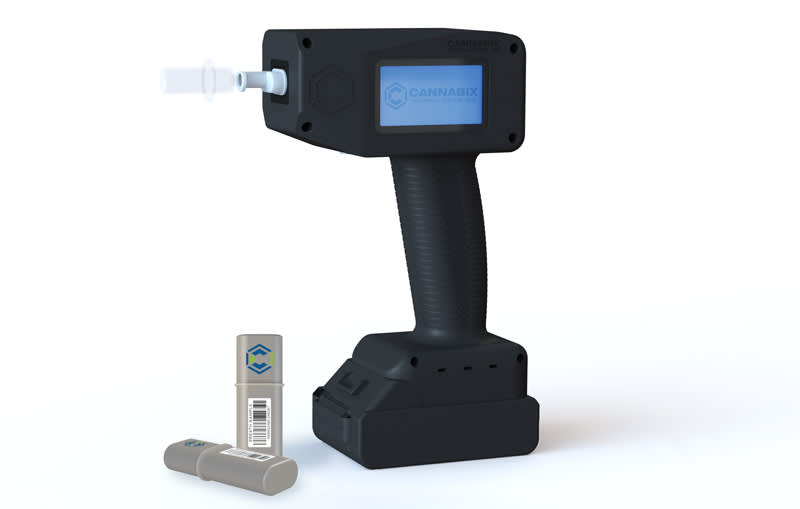
MOGADORE, Ohio and VANCOUVER, BC, March 3, 2026 /PRNewswire/ -- Download as a PDF -- Omega Laboratories, Inc. (Omega), and Cannabix Technologies Inc. (CSE: BLO) (OTCID: BLOZF) proudly announce the peer‑reviewed publication of a groundbreaking study published by Oxford University Press in the prestigious Journal of Analytical Toxicology titled: "Simultaneous Analysis of Δ9‑THC, Δ8‑THC, CBD, and CBN in Breath Aerosols Collected Using Cannabix Technologies Breath Collection Unit." This marks a major milestone in the advancement of marijuana breath testing technology globally.
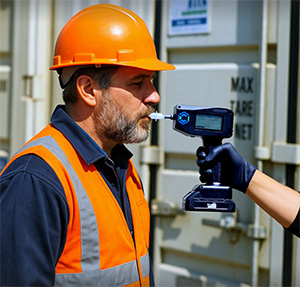 The study demonstrates the accuracy and utility of Omega Laboratories' analytical method for detecting cannabinoids in breath samples collected using Cannabix Technologies' Breath Collection Unit and Breath Cartridges—further validating the system as the leading solution for identifying recent marijuana use. For employers, law enforcement agencies, and safety‑sensitive industries, this breath‑based testing system offers a reliable, non‑invasive solution for detecting recent cannabis consumption. This capability fills a critical gap left by traditional methods, which often detect historical—rather than recent—use.
In May of 2024 Omega and Cannabix entered a strategic partnership to accelerate design improvements on the Cannabix Breath Collection Unit (BCU) as well as the laboratory test method. Over the course of 20 months, Cannabix made several key enhancements to the BCU while Omega refined the analytical methodology to test breath for usage of marijuana. These successful efforts were combined into the validation study recently published by the Journal of Analytical Toxicology, which is available here: https://doi.org/10.1093/jat/bkag016
With medical and recreational marijuana use expanding, identification of recent cannabis use whether via smoking or ingestion has become more critical than ever for workplace drug testing, drug treatment facilities, and road safety programs. Detection of recent cannabis use in exhaled breath offers an alternative to the more invasive and intrusive testing methods using blood or urine. Breath testing, long established for alcohol detection, has recently gained attention for drug testing following evidence that multiple substances can be identified in breath after consumption. The detection window in breath correlates with those found in blood and can assist with the identification of recency of use within the last 4 hours prior to collection.
While alcohol breathalyzers are long-established, cannabis testing remains scientifically complex because THC levels in breath are extremely low. Omega has refined precision testing at these low levels for decades by being experts in utilizing hair samples to detect long-term drug usage. Omega's laboratory validated method combined with the Cannabix Breath Collection Unit has created the most commercially viable, non-invasive system for identifying same-day THC usage.
Publication in the Journal of Analytical Toxicology (JAT) indicates the research on the identification and measurement of toxic substances in biological samples has passed rigorous peer review. It adds to the body of knowledge for the toxicology community. JAT is the official journal of the Society of Forensic Toxicologists (SOFT) and The International Association of Forensic Toxicologists (TIAFT). The method was validated according to ANSI/ASB Standard 036, First Edition 2019 guidelines.
"This new publication reinforces the effectiveness of using breath to detect recent drug use," said Bill Corl, CEO of Omega. "This achievement further demonstrates our expertise in forensic toxicology and our commitment to providing advanced testing solutions."
Omega's method validation builds upon dozens of previously published papers while introducing several new key findings. These include:
- The ability to simultaneously quantify multiple cannabinoids via breath aerosols including Δ9- tetrahydrocannabinol (Δ9-THC), Δ8-tetrahydrocannabinol (Δ8-THC), cannabidiol (CBD), and cannabinol (CBN).
- The validation of a robust laboratory method that is quicker and simpler than previous approaches while achieving improved detection sensitivity and precision.
- The establishment of breath sample stability for up to 7 days via the Cannabix Breath Collection Kit.
- Further confirmation that the concentration versus time trends for THC metabolism assessed from breath correlate with those previously reported from blood.
Due to testing complexity requiring the use of LC-MS/MS, analysis must be performed in a laboratory. Collections performed at the roadside, workplace or in a clinic environment are sent to the laboratory and tested to see if a person had consumed marijuana 15 minutes to 4 hours prior to an incident. This is a very important tool that can be used in combination with other evidence for roadside and other safety sensitive investigations.
The breath collection process includes an ambient air sample followed by an A & B sample which are collected simultaneously with the use of the Cannabix collection cartridge. Omega screens the A sample using LC-MS/MS then, if presumptively positive, the B sample is also tested using LC-MS/MS. If both samples are positive the ambient air sample is tested to rule-out environmental contamination.
Rav Mlait, CEO of Cannabix Technologies, stated, "The peer‑reviewed article publication in the prestigious Journal of Analytical Toxicology is a significant milestone for Cannabix and its shareholders. I commend the dedicated efforts of both the Cannabix and Omega teams in advancing our breath-based technology to help improve public safety."
Cannabix is currently working to ramp up manufacturing of the BCU's and Breath Collection Kits. The Cannabix BCU brings several advantages:
- Omega's validation helps establish the Cannabix BCU as a stable, consistent and portable tool for breath collection. The BCU offers a quick, non-invasive collection method regardless of subject's lung function.
- The BCU adds several safeguards to the reproducible collection process, including the monitoring of subject's breath pressure and volume, the ability to collect ambient air for specimen validity, and A & B cartridges for a dual testing process.
- The Breath Collection Kit cartridges used by the BCU are currently the most robust method of sending breath samples for laboratory testing. The sturdy nature of the cartridges combined with shipping stability time helps ensure that samples can be successfully processed once received at Omega Laboratories.
The teams at Omega Laboratories and Cannabix are pleased to partner together so that this innovative, much-needed technology is available for safety-sensitive applications.
For additional information on these solutions, please contact Omega at 1-800-665-5569 or sales@omegalabs.net.
Cautionary Statement Regarding Forward-Looking Statements
This news release contains forward-looking statements within the meaning of applicable securities laws. Forward-looking statements are often identified by terms such as "anticipates," "expects," "intends," "believes," "estimates," "may," "will," "potential," "proposed," "positioned," and similar expressions, or statements that certain events or conditions "may" or "will" occur. Forward‑looking statements in this release include, but are not limited to: statements regarding the interpretation, impact, and potential use of the peer‑reviewed study; the performance, capabilities, and advantages of the Cannabix Breath Collection Unit and Breath Collection Kits; anticipated demand for breath-based cannabis testing; the scalability and manufacturing of devices and cartridges; the development, validation, and commercialization of technologies described; the potential adoption of breath testing by workplace, forensic, clinical, or law enforcement customers; expectations regarding additional testing, pilot programs, or regulatory processes; and the growth of market opportunities related to cannabis impairment detection. Forward-looking statements involve numerous risks and uncertainties that may cause actual results, performance, or achievements to differ materially from those expressed or implied in the statements. Such risks include, but are not limited to: the risk that scientific results, including validation or peer‑review findings, may not be replicated in broader use; that further research or regulatory review may require changes to testing methods or device design; risks associated with product development, manufacturing scale‑up, supply chain availability, or cost escalation; risks relating to commercialization, customer adoption, and market acceptance of new testing technologies; the ability of the Company and its partners to meet regulatory, forensic, or evidentiary standards; risks associated with intellectual property protection and patent approvals; competitive technologies or market changes; general economic, financial, or operational risks; and risks that expected agreements, partnerships, or deployments may not materialize or may be delayed. There is no assurance that any proposed products will be successfully developed, manufactured at scale, validated by regulators or customers, or achieve commercial adoption. There is no assurance that breath-based THC detection will be accepted as a legal standard or evidentiary tool in any jurisdiction, or that peer‑review publication will result in commercial, regulatory, or legal benefits. Actual results and future events may differ materially from those anticipated. All forward-looking statements in this release are made as of the date hereof and are based on current expectations, estimates, and assumptions that involve significant business, scientific, regulatory, and economic uncertainties. The Company undertakes no obligation to update forward‑looking statements except as required by law.